
- Tips
- technology
- Frequently Asked Questions
- Tests
- mAh capacity
- Rated Capacity
- comparison
- everActive
- Batteries vs rechargeable batteries
- Accumulated energy
- Durability of rechargeable batteries
- Efficiency of rechargeable batteries
- battery voltage
- LR03 AAA
- LR6 AA
- eneloop
- AG13 LR1154 LR44
- CR 2032
- Delta V
- Charge Cycles
- internal resistance
- charge level
- memory effect
- accredited test
- SR44 357
- Hearing Batteries 675
- SR626 377
- Watch Batteries
- Polarity
- Mah
- passivation
- LS 14250
- LS 14500
Batteries or rechargeable batteries - the choice depends on the device!


What to consider when choosing power for your devices?
In our opinion, the primary determinant of when to use disposable batteries and when to use rechargeable batteries should be the operating time of the device on batteries. If the battery replacement occurs every few months or over longer periods, the justification for using rechargeable batteries will always be very questionable.
We propose following the scheme below:
1. If the device operates for many months on a set of disposable batteries, it does not make economic sense to invest in rechargeable batteries. Batteries used in such devices will simply waste away and age (rapid increase in internal resistance). The situation changes when batteries last a maximum of 1-2 months until the next replacement - in such a case, it is worth considering Ni-MH batteries. According to the above, it seems irrational to use batteries in devices such as watches, remote controls, meters, or devices that we reach for occasionally - in such devices, apart from economic reasons, the excellent resistance to leakage speaks in favor of rechargeable batteries - this can be significant in more expensive equipment.
2. If we have a device with high power consumption, where there is a high intensity of use, we absolutely choose rechargeable batteries - high-power flashlights, flash units, some toys, mechanical models, household appliance accessories.
3. Ni-MH rechargeable batteries are a direct replacement for disposable batteries in most devices. However, it is essential to check the user manual to see if there are any manufacturer’s contraindications to using Ni-MH rechargeable batteries.
What to pay attention to when purchasing Ni-MH batteries?
- Let's determine the age of the batteries being purchased. Every serious, reputable manufacturer provides the production batch on their products. Not everyone knows that even a 2-year-old battery can offer significantly lower parameters than a brand new one, and in extreme cases, it may not even be usable.
- Let's wisely choose the number of Ni-MH batteries needed for our daily needs. The last thing purchased cells need is long storage in a drawer, waiting for their turn. If we already have a large number of potential "sleepers," it is worth regularly, e.g., once every 6 months, to perform a full discharge and charge cycle.
- Choose products from trusted and tested brands. This will help us avoid later disappointment. Unfortunately, it is still possible to buy batteries of unknown origin on the market, with significantly distorted, unrealistic parameters.
Let's use proven solutions, e.g. Panasonic Eneloop batteries, everActive, Varta, Energizer, Duracell, GP.
European manufacturers are required to provide reliable information regarding the capacity of the battery. The technological limit currently achieved by Ni-MH nickel-metal hydride batteries is about 1100 mAh for R03/AAA batteries and about 2700 mAh for R6/AA batteries - any higher value will be false information - we effectively avoid such products.
See the offer of hurt.com.pl in the area of:
- Ni-MH R6/AA Batteries
- Ni-MH R03/AAA Batteries
- Ni-MH R14/C Batteries
- Ni-MH R20/D Batteries
- Ni-MH 6F22/9V Batteries
- Bulk packaging of Ni-MH batteries
How long to charge Ni-MH batteries?
What are the differences between alkaline batteries and rechargeable batteries?
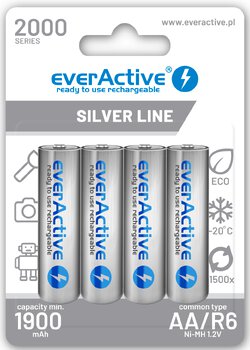
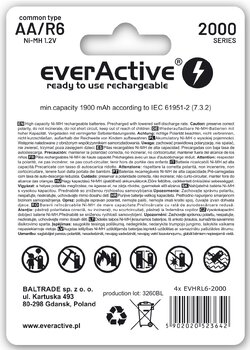
4 x AA / R6 everActive Ni-MH 2000 mAh rechargeable batteries ready to use "Silver line"
- excellent batteries at a low price
- 4pcs - factory consumer packaging - blister
- tested performance - real capacity
- pre-charged batteries, next generation made with Ready To Use technology
- highest quality of batteries confirmed by numerous tests
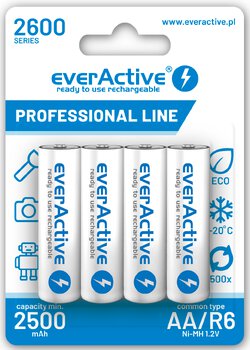
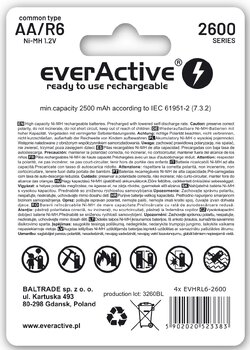
4 x AA / R6 everActive Ni-MH 2600 mAh rechargeable batteries ready to use "Professional line"
- excellent batteries at a low price
- 4pcs. - factory consumer packaging - blister
- tested performance - real capacity
- pre-charged batteries, next generation made with Ready To Use technology
- highest quality of batteries confirmed by numerous tests
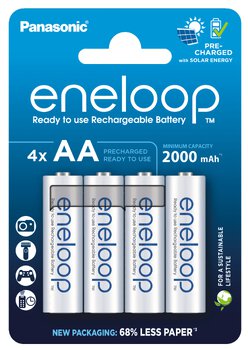
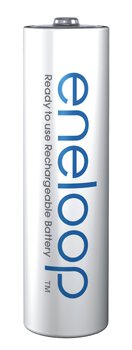
4 x AA / R6 Panasonic Eneloop Ni-MH 2000mAh BK-3MCDE/4BE (blister)
- higher capacity min. 2000 mAh
- up to 2100 charging cycles
- retains 70% energy after 10 years from charging!
- operates in low temperatures down to -20°C!
- charged in the production process with solar energy
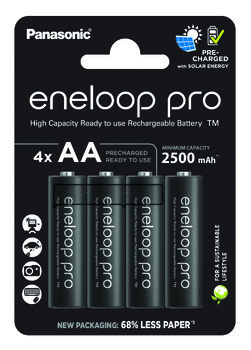
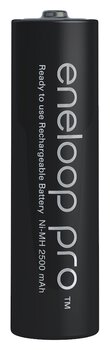
4 x R6 / AA Panasonic Eneloop PRO NEW Ni-MH 2500mAh BK-3HCDE/4BE (blister)
- highest capacity among new generation rechargeable batteries 2500 mAh
- retains 85% of energy after 12 months from charging!
- operates in low temperatures down to -20°C!
- charged during production with solar energy
Author: Michał Seredziński
Copying the content of the text or its parts without the consent of a representative of Baltrade sp. z o.o. is prohibited.
-
Z ciekawości prosiłbym o parę słów komentarza odnośnie akumulatorków eneloop lite reklamowanych jako dedykowane np. do pilotów czy zegarów, czyli tam gdzie baterie lepiej się sprawdzają. Ile jest w tym techniki, a ile marketingu? I czy tylko eneloop ma taką ofertę czy konkurencja też?1144
4
2
-
Generalnie im niższej pojemności akumulatorki Ni-MH, tym wyższą trwałość oferują w mało wymagających zastosowaniach. Takie akumulatorki najwolniej starzeją się w czasie leżąc nieużywane oraz wybaczają najwięcej błędów użytkowych jak zbyt głębokie rozładowanie, czy przeładowanie. Dlatego tego typu akumulatory w przeciwieństwie do akumulatorków o najwyższych pojemnościach niezawodnie i latami działają w pilotach, zegarkach, czy telefonach DECT gdzie z punktu użytkownika nie jest wymagana bardzo wysoka pojemność. Inni producenci również mają w swoim portfolio podobne linie produktów, jednak są one trudniej dostępne i nie tak popularne, a dodatkowo uchodzą za mniej trwałe od Eneloopa.1147
6
1
-
-
Witam
Jeśli mamy do czynienia z urządzeniem pobierającym szybko energię - VHF Standard Horizon HX300, którego deklarowany czas na 3 bateriach alkalicznych AAA to 8-10 godzin, to zgodnie z treścią porad baterie NiMh powinny być lepszym wyborem. Dlaczego więc producent podaje, by zamiennie do dostarczonego battery pack o parametrach 3.7V 1560mAh Li-ion używać tylko baterii alkalicznych? Czy używanie akumulatorków Ni-Mh może doprowadzić do zniszczenia krótkofalówki?
W innej krótkofalówce używam akumulatorków NiMh od dłuższego czasu i wszystko jest ok. Co prawda producent nie zastrzegał wyłączności baterii alkalicznych, ale zasada działania jest ta sama - tak się wydaje. Podobny czas rozładowania i standardowe dwa poziomy mocy zastrzeżone prawem morski dla pracy urządzeń: wysoki - 5W i niski 1W.
Z góry dziękuję za odpowiedź.632
4
3-
Panie Piotrze, na wstępie przepraszam za późną odpowiedź, jednak zwyczajnie nie dostałem powiadomienia o wpisie i nie mogłem w porę zareagować.
W "prądożernych" urządzeniach, a takim na pewno są wszelkie radia komunikacyjne, akumulatorki Ni-MH zawsze będą działać bardziej efektywnie od baterii alkalicznych. Jeżeli producent dopuszcza użycie ogniwa Li-ion 3.6V to nic nie stoi na przeszkodzie, aby użyć w to miejsce 3 połączonych szeregowo ogniw Ni-MH 1,2V.
Czasem problemem jest fakt, że urządzenie jest liczone pod kątem baterii alkalicznych - zdarza się, że pobór prądu jest ściśle regulowany za pomocą najprostszego sterownika (w formie rezystora) - im wyższe napięcie baterii tym wyższy prąd płynący do urządzenia, zainstalowanie akumulatorków Ni-MH powoduje w takich sytuacjach, że do takiego urządzenia popłynie wyraźnie wyższy prąd i wydzieli się (czasem wyraźnie) wyższa moc jak na bateriach alkalicznych, co może być przynajmniej teoretycznie niebezpieczne (akumulatorki Ni-MH mają wyższe napięcie pracy od baterii alkalicznych w urządzeniach o wysokim poborze prądu - obrazujemy to w innym wpisie https://www.hurt.com.pl/content/events/view/3/Jakie_sa_roznice_pomiedzy_akumulatorkiem_1_2V_Ni_MH_a_bateria_alkaliczna_1_5V ).
Z drugiej strony akumulatory i baterie Li-ion zwykle oferują jeszcze niższą rezystancję i wyższe średnie napięcie pracy jak 3 połączone szeregowo akumulatory Ni-MH 1,2V - dlatego nie widzę w Pana wypadku żadnych przeciwskazań do zastosowania akumulatorków Ni-MH.
1118
4
2 -
Może chodzi o napięcie pracy, które w bateriach wynosi 1,5V, a w akumulatorkach 1,2V.1117
4
2
-
Różnica w napięciach między akumulatorkiem Ni-MH 1,2V a baterią alkaliczną 1,5V nie jest tak oczywista i jednoznaczna - wyjaśniamy to w innym artykule https://www.hurt.com.pl/content/events/view/3/Jakie_sa_roznice_pomiedzy_akumulatorkiem_1_2V_Ni_MH_a_bateria_alkaliczna_1_5V.
Paradoksalnie to akumulatorki 1,2V w wielu wypadkach będą oferowały wyższe napięcie od baterii alkalicznych. Im wyższe wymagania energetyczne ma nasze urządzenie tym większa będzie przewaga akumulatorków Ni-MH.1119
3
2
-
-