
- Tips
- technology
- Frequently Asked Questions
- Tests
- mAh capacity
- Rated Capacity
- comparison
- everActive
- Batteries vs rechargeable batteries
- Accumulated energy
- Durability of rechargeable batteries
- Efficiency of rechargeable batteries
- battery voltage
- LR03 AAA
- LR6 AA
- eneloop
- AG13 LR1154 LR44
- CR 2032
- Delta V
- Charge Cycles
- internal resistance
- charge level
- memory effect
- accredited test
- SR44 357
- Hearing Batteries 675
- SR626 377
- Watch Batteries
- Polarity
- Mah
- passivation
- LS 14250
- LS 14500
We are testing cheap batteries branded with the Eneloop logo purchased from a popular auction site. Beware of potential counterfeits!


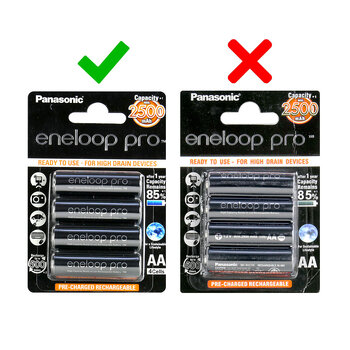
Recently, we have received alarming information from our customers and readers that questionable quality Panasonic Eneloop batteries have appeared on the market. After analyzing the information received, we made a controlled purchase of batteries on one of the auctions on the most popular site in Poland.
It turned out that we most likely received counterfeit goods!
How to recognize a fake, how poor can counterfeit batteries be?
We invite you to read our next test.
Note: You will see newer comparisons of original eneloop Pro batteries with counterfeits in these articles:
- Another test of suspiciously cheap eneloop Pro batteries
- Self-discharge test of counterfeits after a year
Promotion (continue reading below)
You can buy original eneloop batteries at the store hurt.com.pl - the latest ones available since April 2022 come in new, eco-friendly packaging that does not contain plastic.
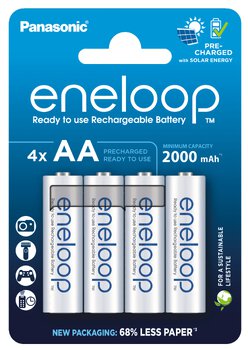
4 x AA / R6 Panasonic Eneloop Ni-MH 2000mAh BK-3MCDE/4BE (blister)
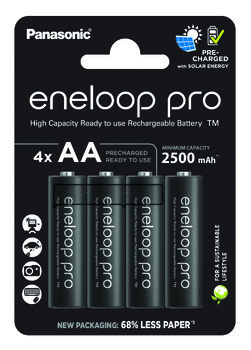
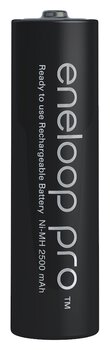
4 x R6 / AA Panasonic Eneloop PRO NEW Ni-MH 2500mAh BK-3HCDE/4BE (blister)
Panasonic Eneloop are high-quality Ni-MH batteries produced in Japan for many years. As of May 20, 2021, the 5th generation of these extremely popular batteries is available in our offer. In this case, quality goes hand in hand with a high price - the product itself is therefore a tempting target for counterfeiters, dishonest sellers, or importers.
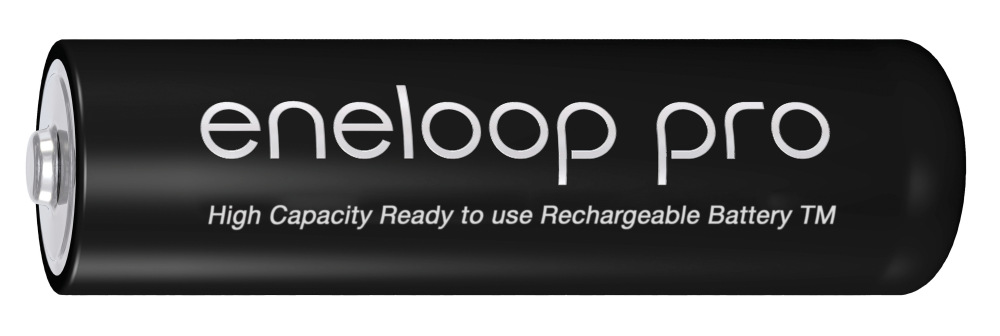
In March 2021 through a popular auction service we purchased the following products: Panasonic Eneloop PRO AA 2500 mAh batteries and Panasonic Eneloop PRO AAA 930 mAh batteries - theoretically the most efficient series of the Eneloop brand.
We conducted a detailed comparison of these batteries to original, reference samples, which we import directly from Panasonic.
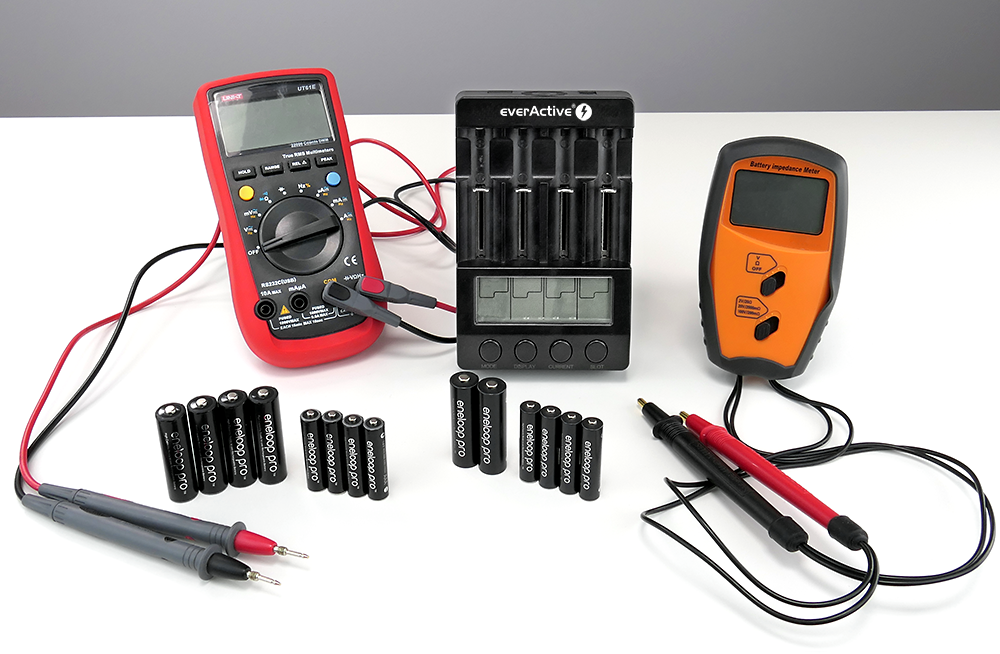
Our testing procedure:
1. We evaluated the appearance of the received product, checked the attached proof of purchase.
2. We prepared detailed photographic documentation - we compared the appearance of the purchased batteries to reference models.
3. We checked and compared the weight of the products.
4. We checked to what extent the batteries were charged - we started by discharging them and measuring the initial capacity.
5. We conducted 5 charge and discharge cycles to determine the true capacity of the batteries.
6. We measured the internal impedance of the batteries.
7. Summary - what we think about the tested batteries.
We have planned more tests for the coming weeks - including assessing the self-discharge rate and performance in demanding devices (at high discharge current).
1. Preliminary assessment of the purchased products.
At first glance, nothing caught our attention. The products were offered at a price only slightly lower than other sellers.
The product was purchased with free delivery as part of the Smart package.
The batteries were packed in factory packaging - blisters. Everything was marked with the Panasonic Eneloop logo.
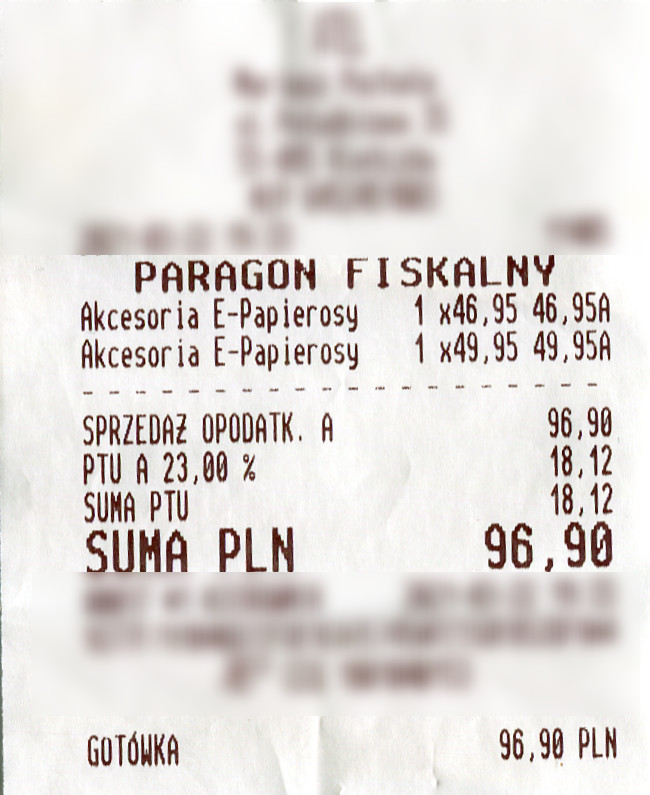
Only the product name on the attached receipt from the cash register "Accessories E-Cigarettes" might raise some suspicion.
It is certain that a less experienced user would not notice anything suspicious at this stage.
However, comparing the appearance of the purchased blisters directly to the original packaging, one can easily notice differences.
Original Eneloop batteries are hand-packed precisely in Europe and in 99.90% of cases, the batteries are always arranged the same way - logo facing the user. This is a distinguishing feature of these batteries compared to other manufacturers. In the case of the purchased batteries, there was a complete mess in this regard, making the entire set look less aesthetically pleasing.
We easily found differences in printing, and even language errors in the translations on the reverse side.
Unpacked batteries also differed significantly in labeling, and the prints were not perfectly reproduced.
It was also easy to notice structural differences between the batteries.
The purchased AAA/R03 batteries turned out to be 0.1mm longer and 0.1mm thicker than the reference, original Eneloop batteries.
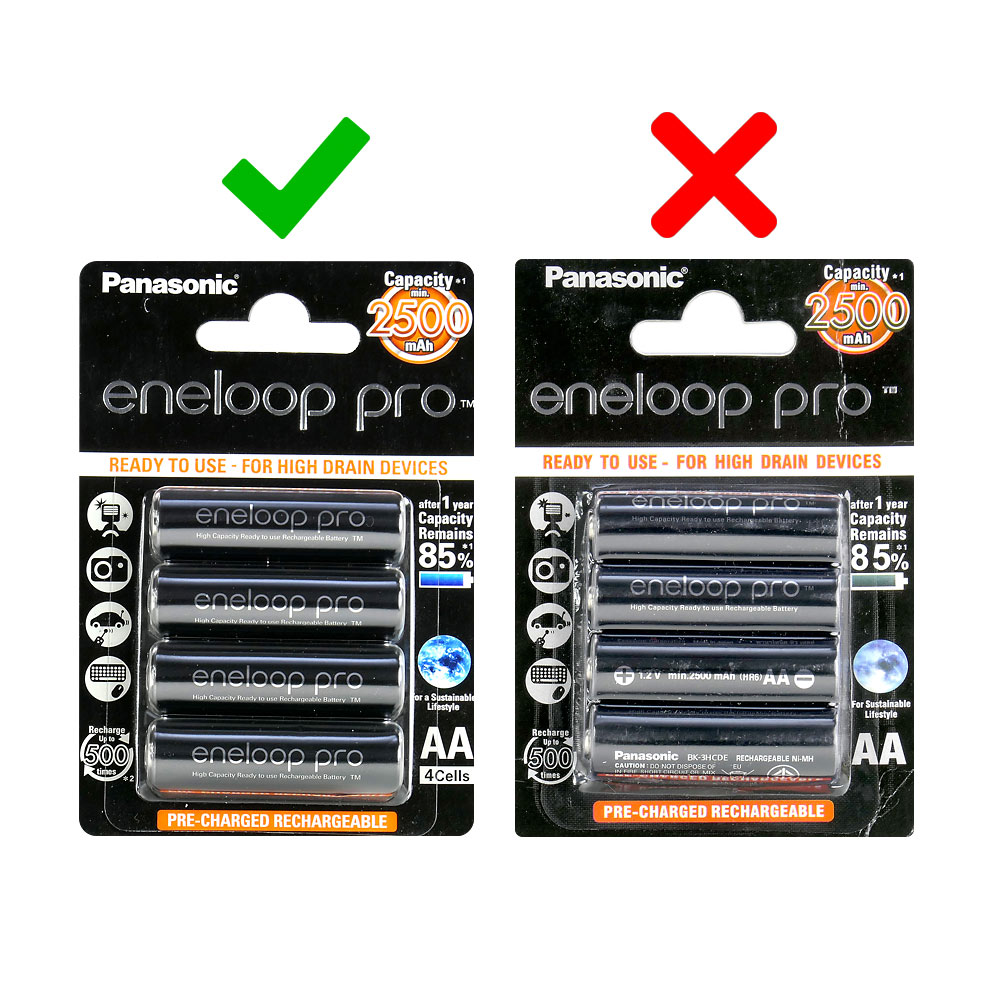
2. Comparison of product images.
Packaging - size AAA - original batteries.
Packaging - size AAA - purchased batteries - potentially counterfeit.
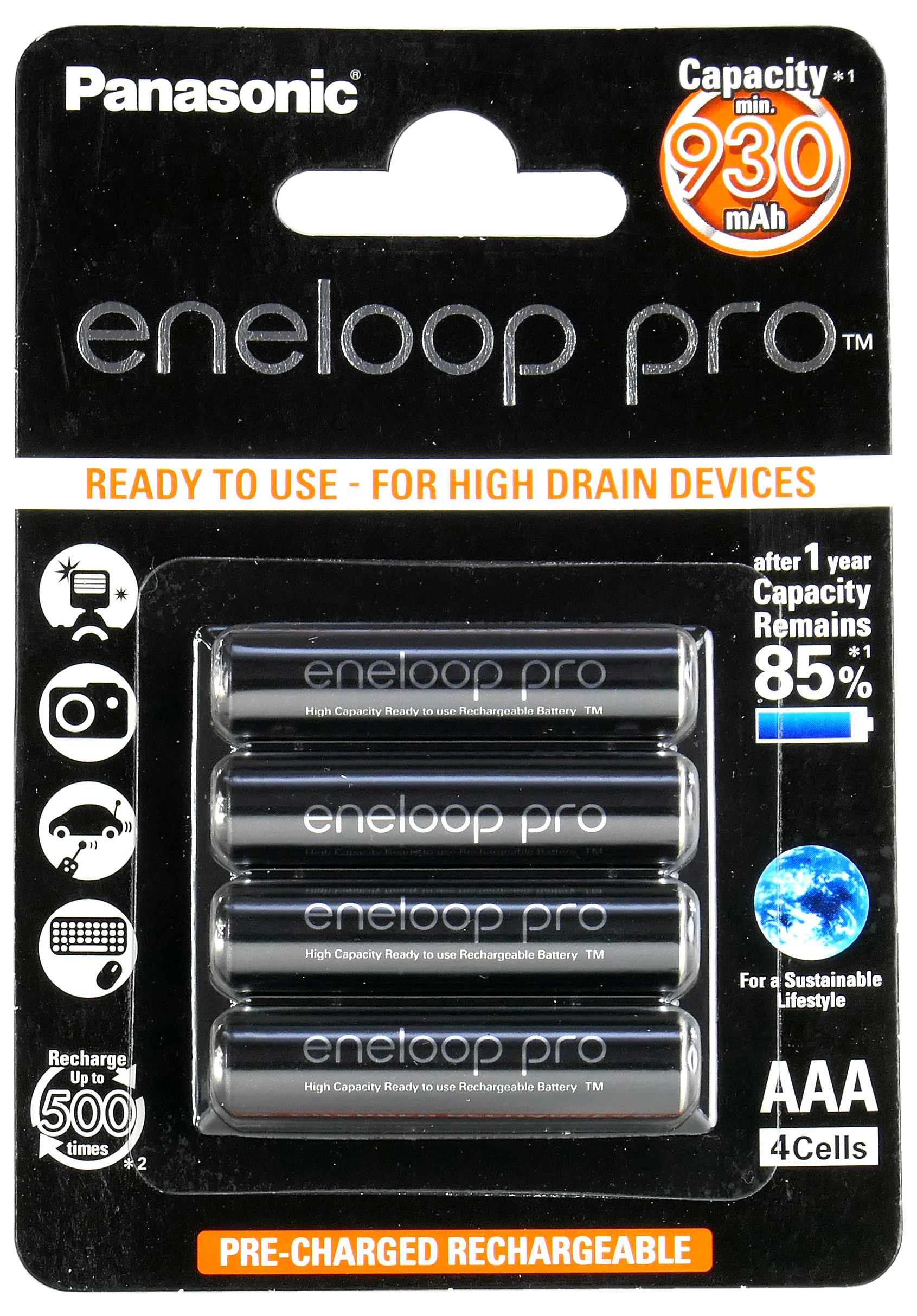
Packaging - size AAA - original batteries.
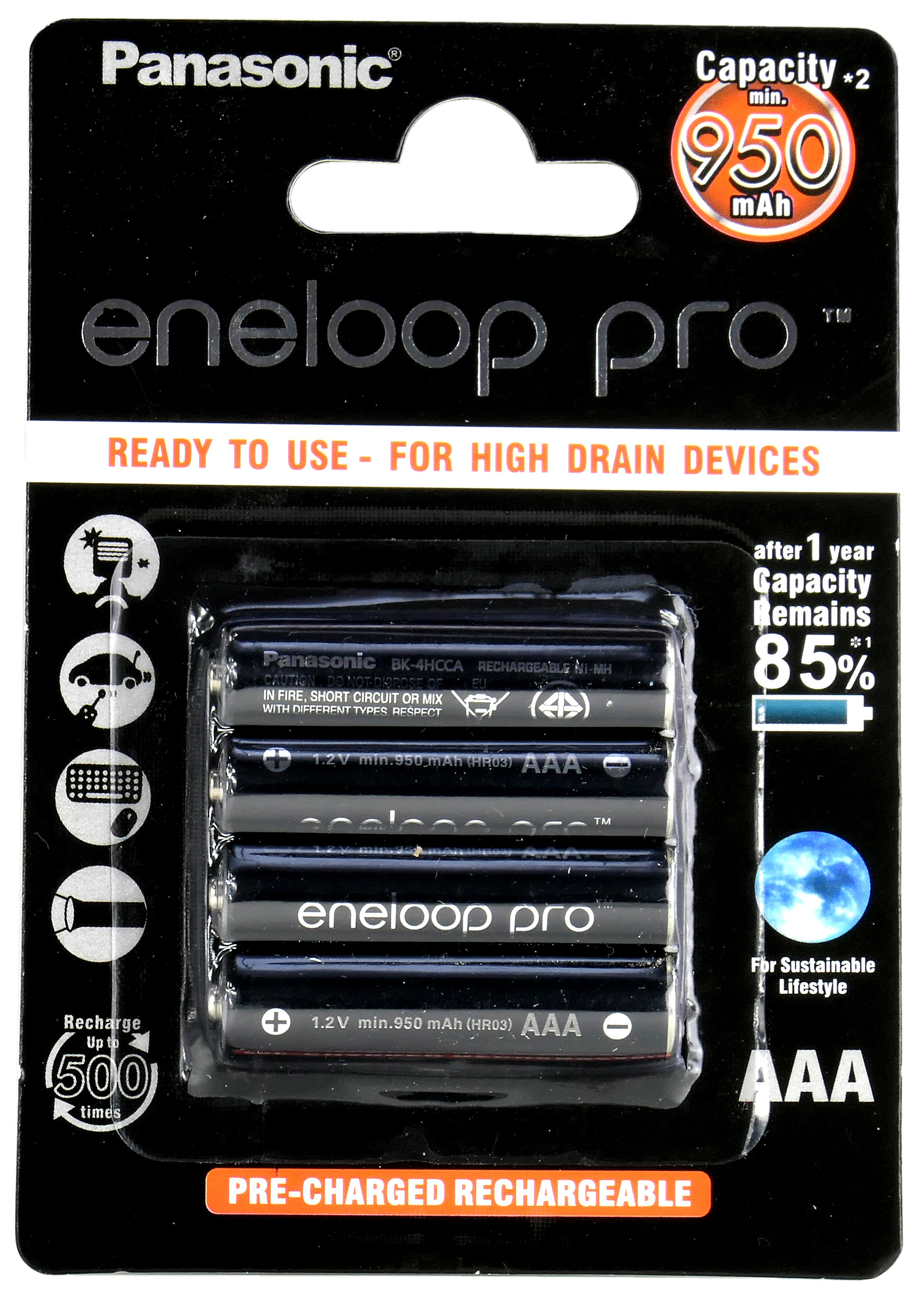
Packaging - size AAA - purchased batteries - potentially counterfeit.
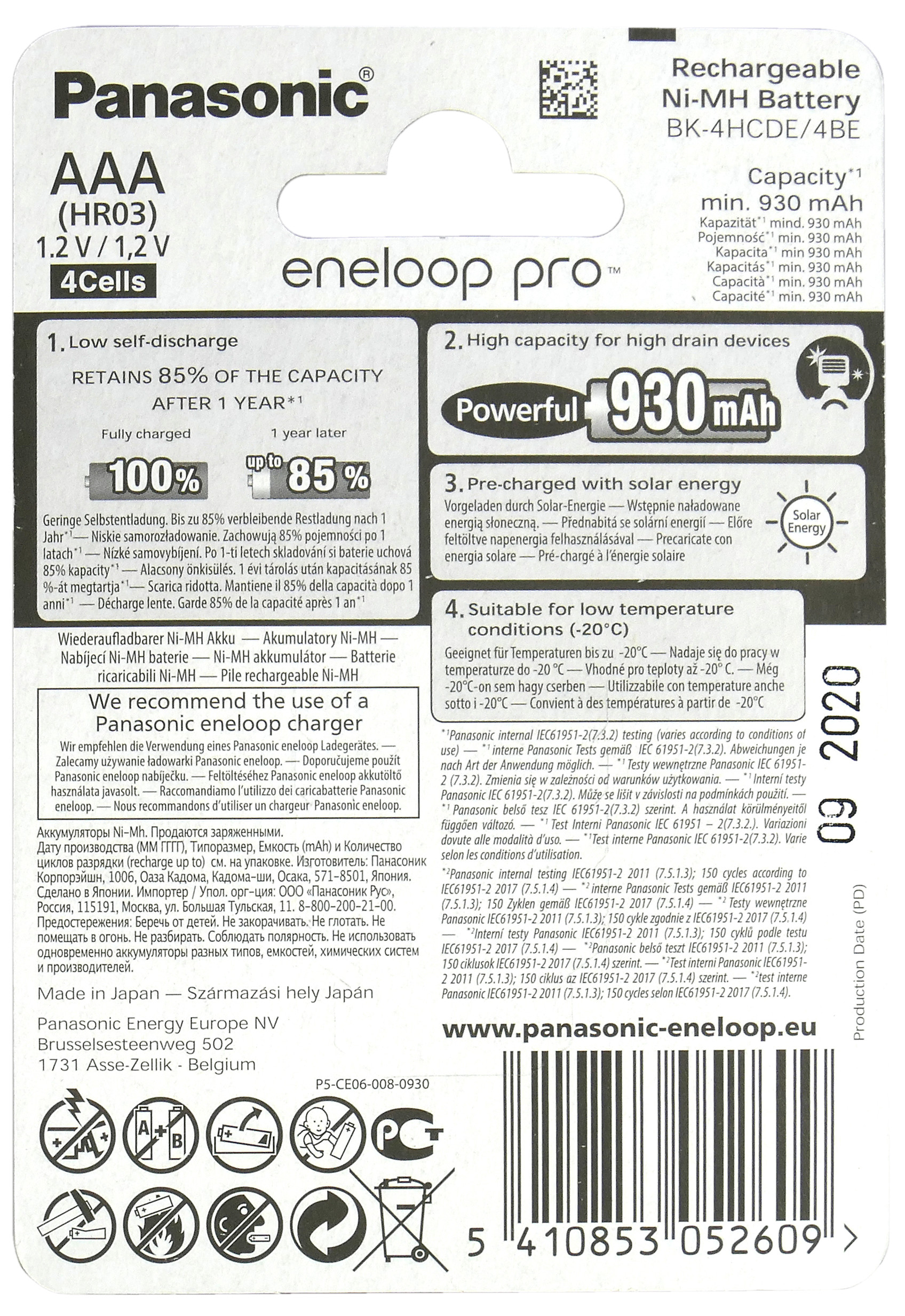
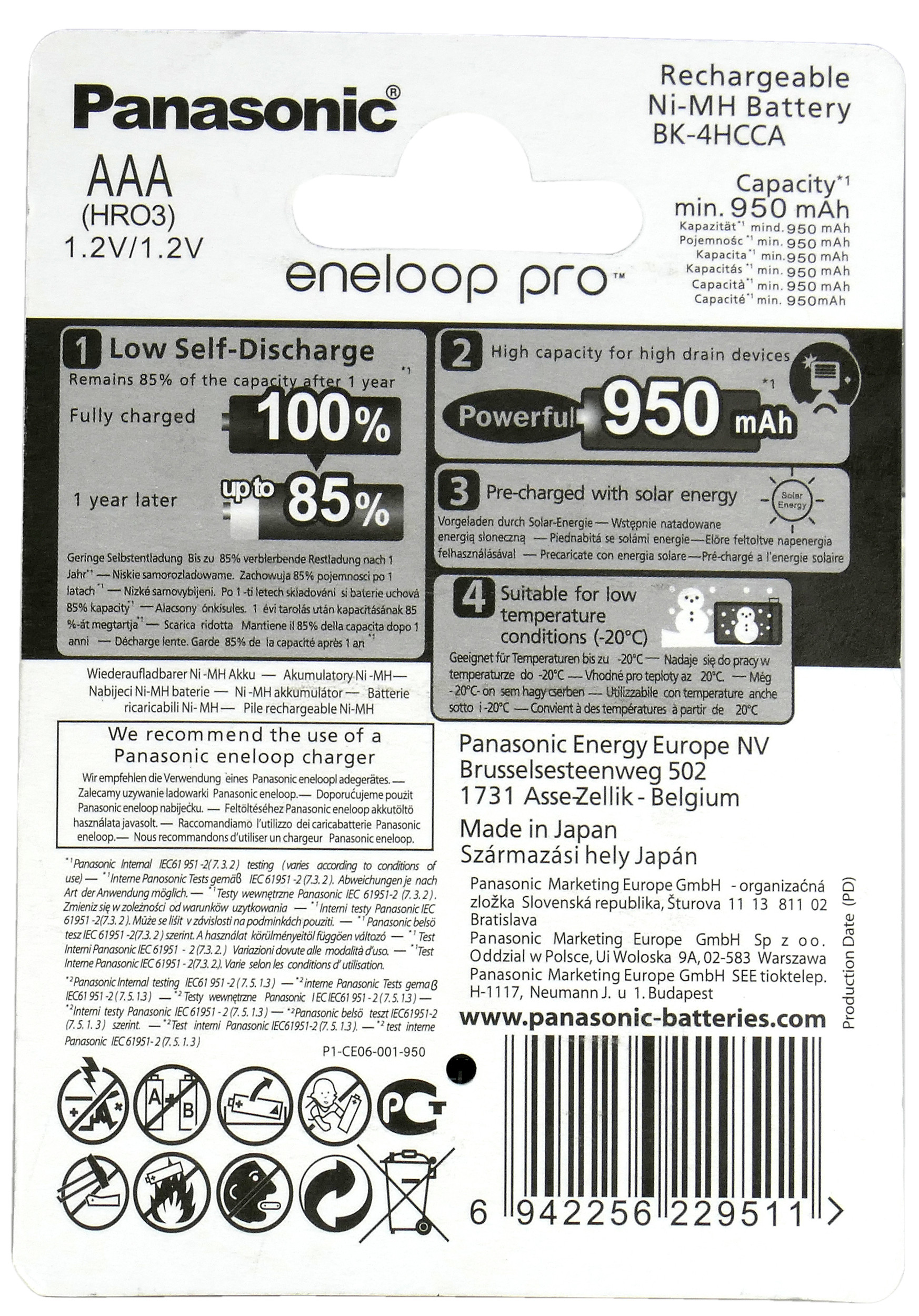
Packaging - size AA - original batteries.
Packaging - size AAA - purchased batteries - potentially counterfeit.
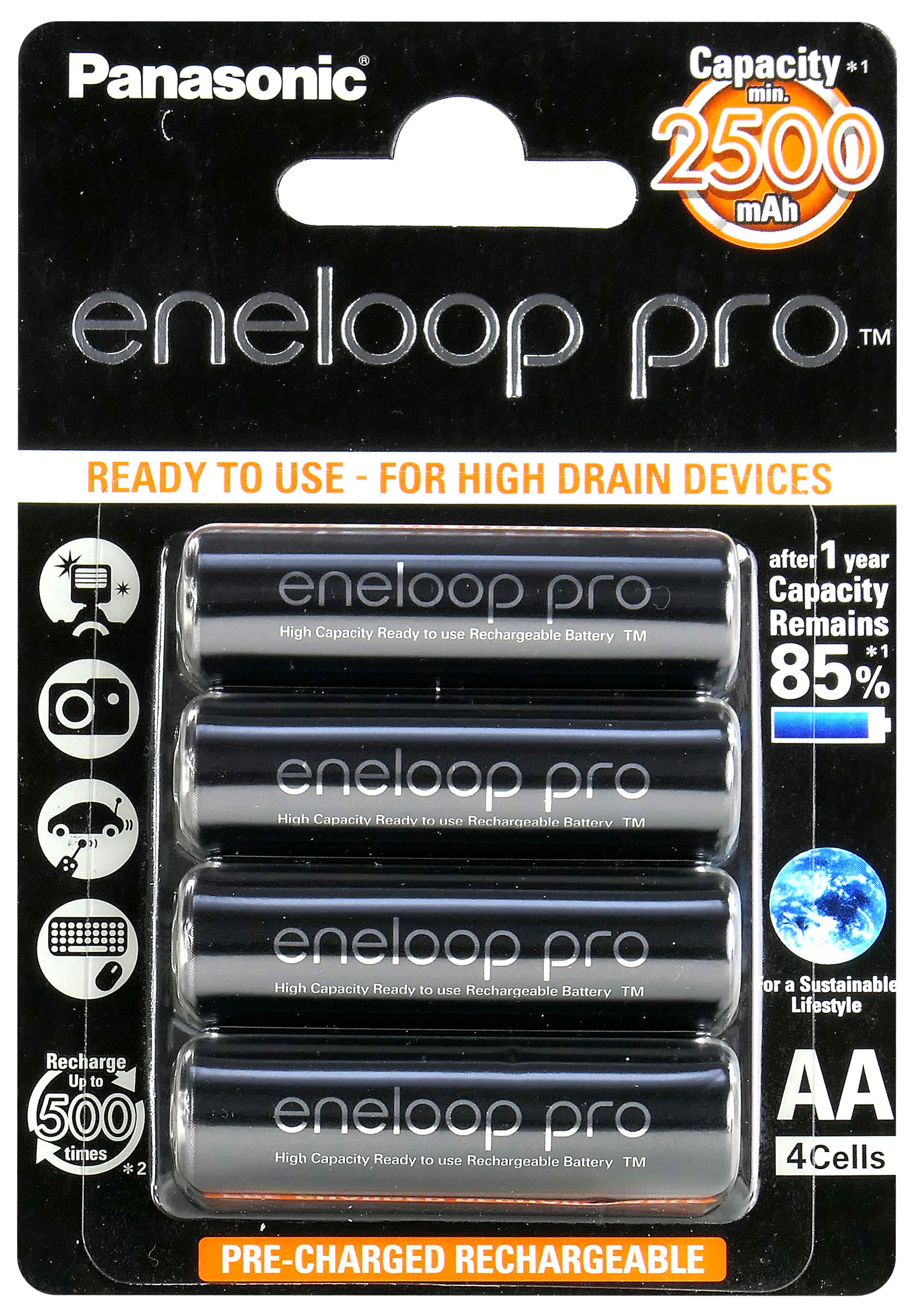
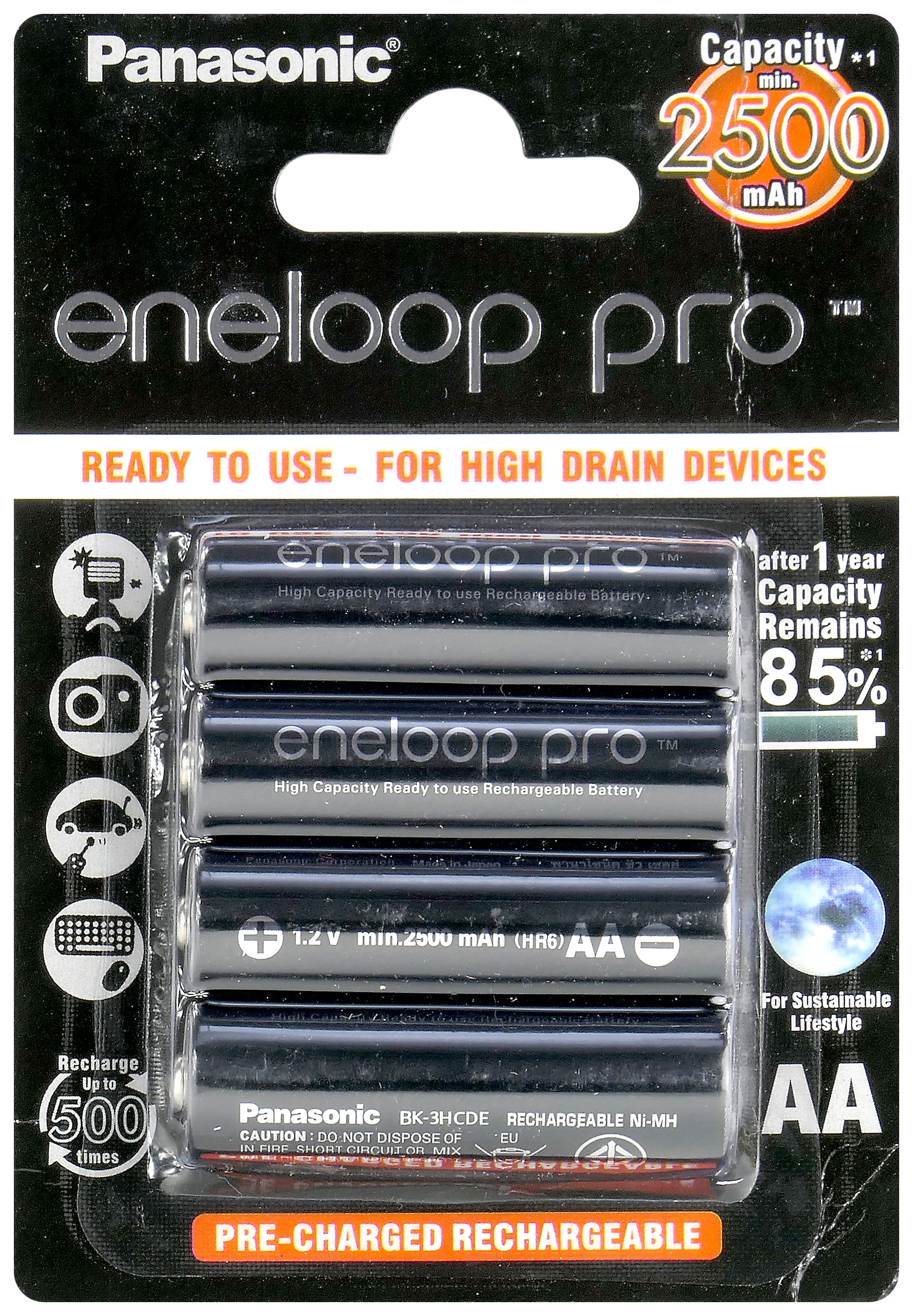
Packaging - size AA - original batteries.
Packaging - size AAA - purchased batteries - potentially counterfeit.
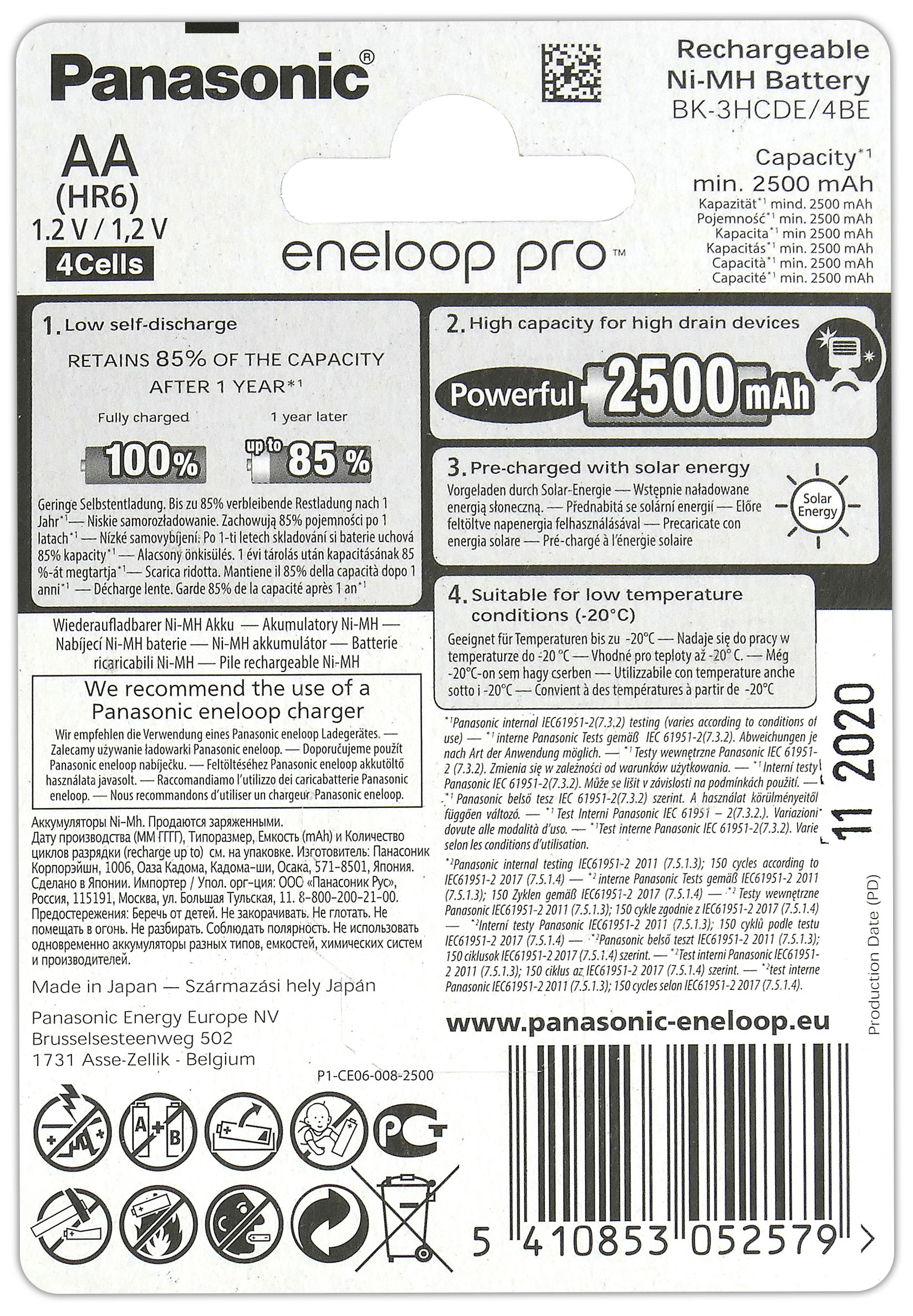
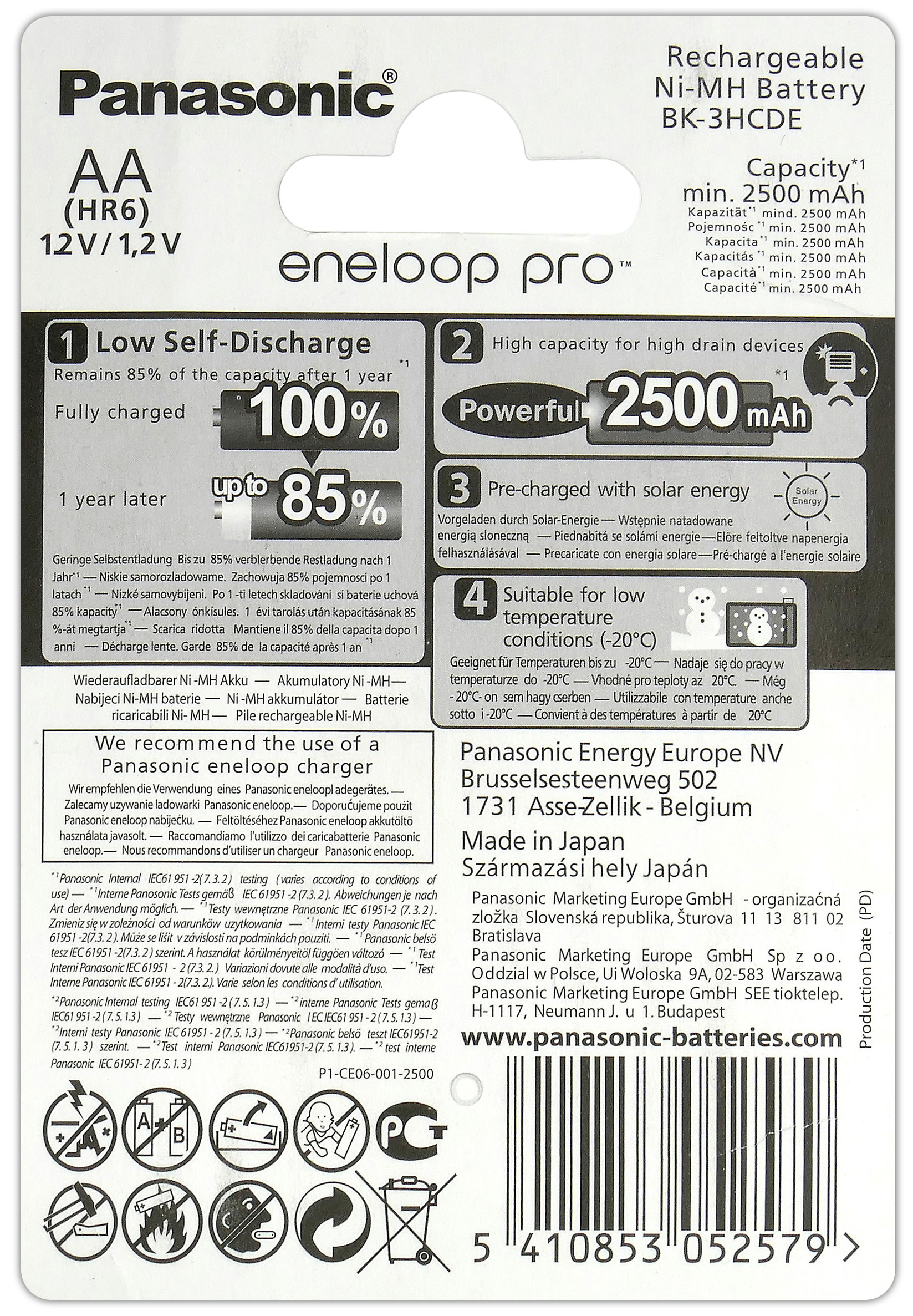
Features of the original blister:
- the batteries are evenly placed on the blister - logo facing the user,
- for R03/AAA cells, the minimum declared capacity is 930 mAh,
- for R03/AAA cells, the indicated battery size is HR03, series BK-4HCDE/4BE,
- clear, well-saturated prints,
- the production date is visible on the back of the blister,
- no recurring language errors in translations, etc.,
- manufacturer's website address: www.panasonic-eneloop.eu.
Features of a potential counterfeit:
- batteries randomly placed on the blister,
- for R03/AAA cells, the minimum declared capacity is 950 mAh,
- for R03/AAA cells, the indicated battery size is HRO3, series BK-4HCCA,
- poorly reproduced, pale graphic elements - e.g., a visible flaw on the Earth symbol on the front of the blister,
- no visible production date on the back,
- language errors and typos - lack of Polish "ogonek" characters,
- completely different EAN code for AAA/R03 cells
- different manufacturer's website address.
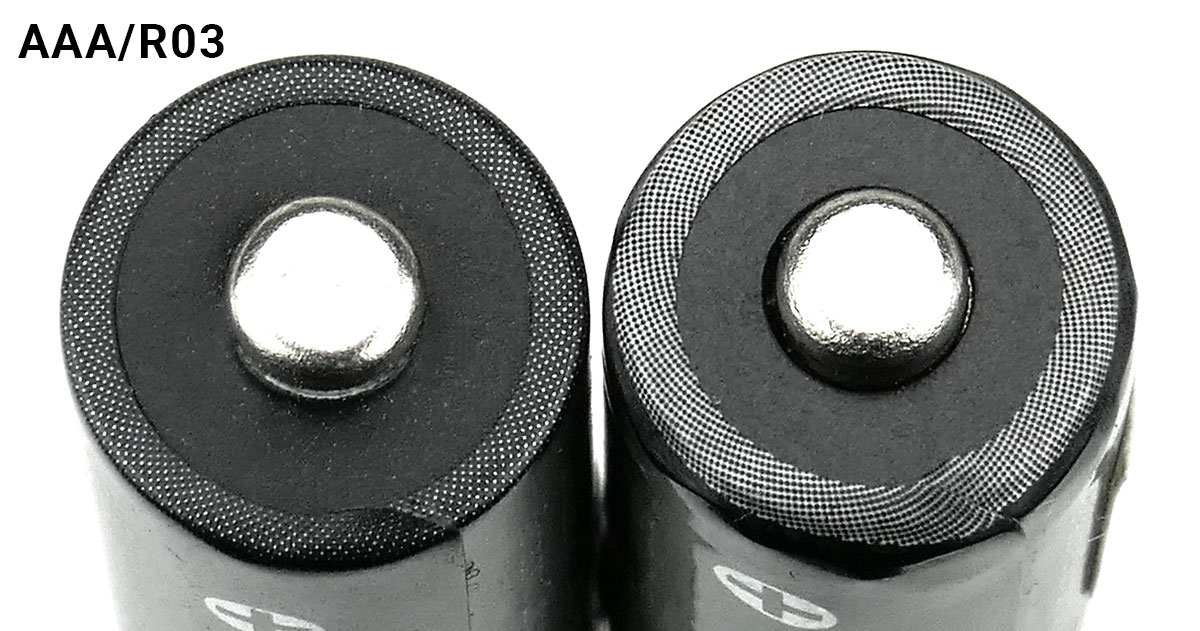
Batteries - on the left side original, on the right purchased - potentially counterfeit.
Original batteries.
Purchased batteries - potentially counterfeit.
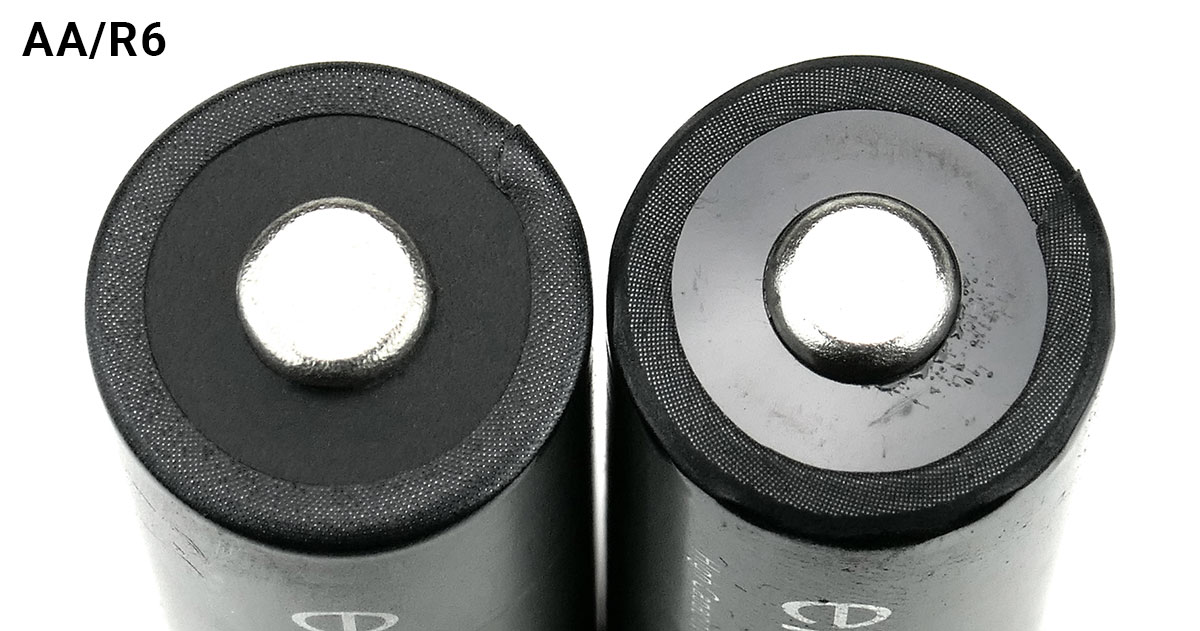
Original batteries.
Purchased batteries - potentially counterfeit.
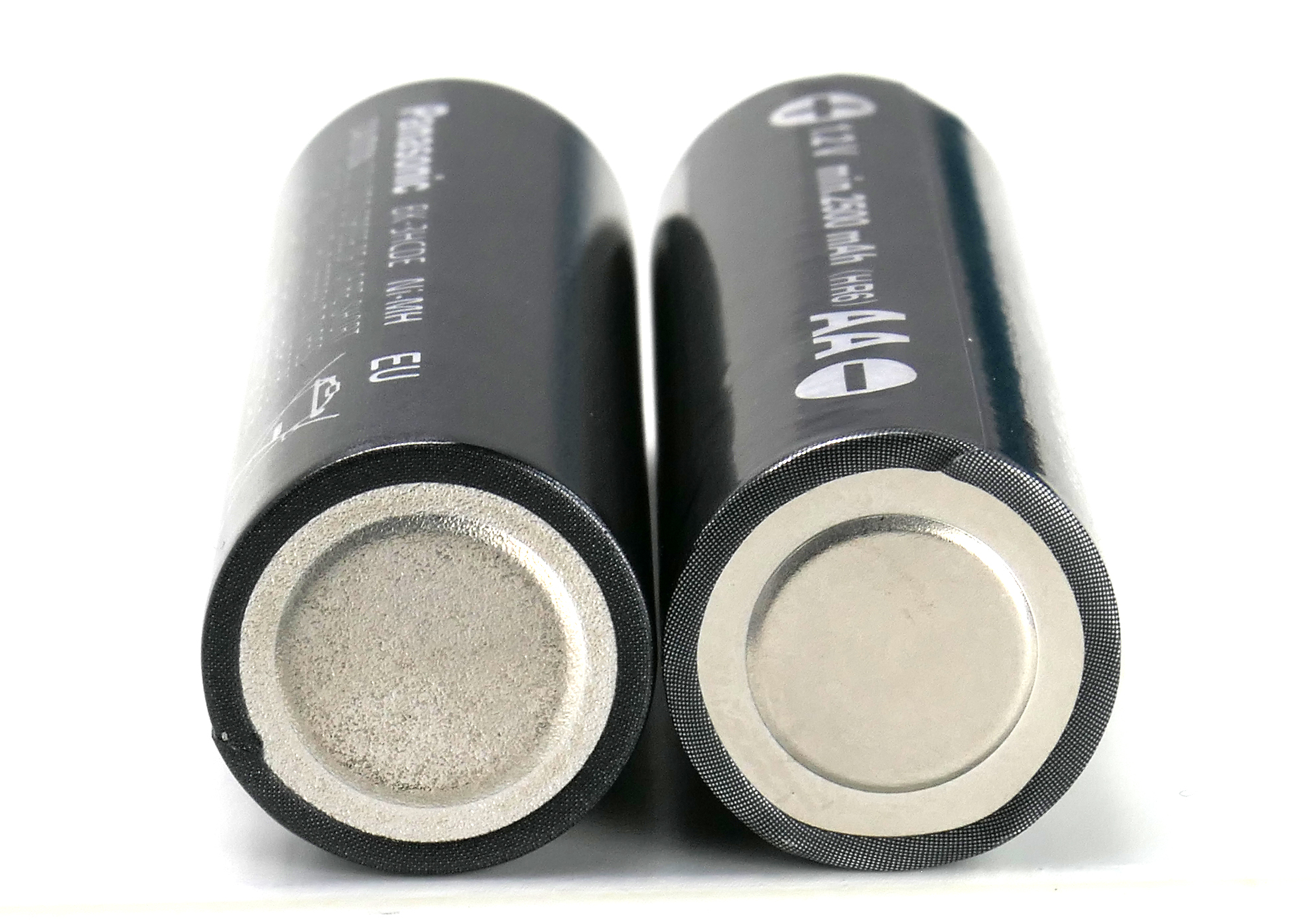
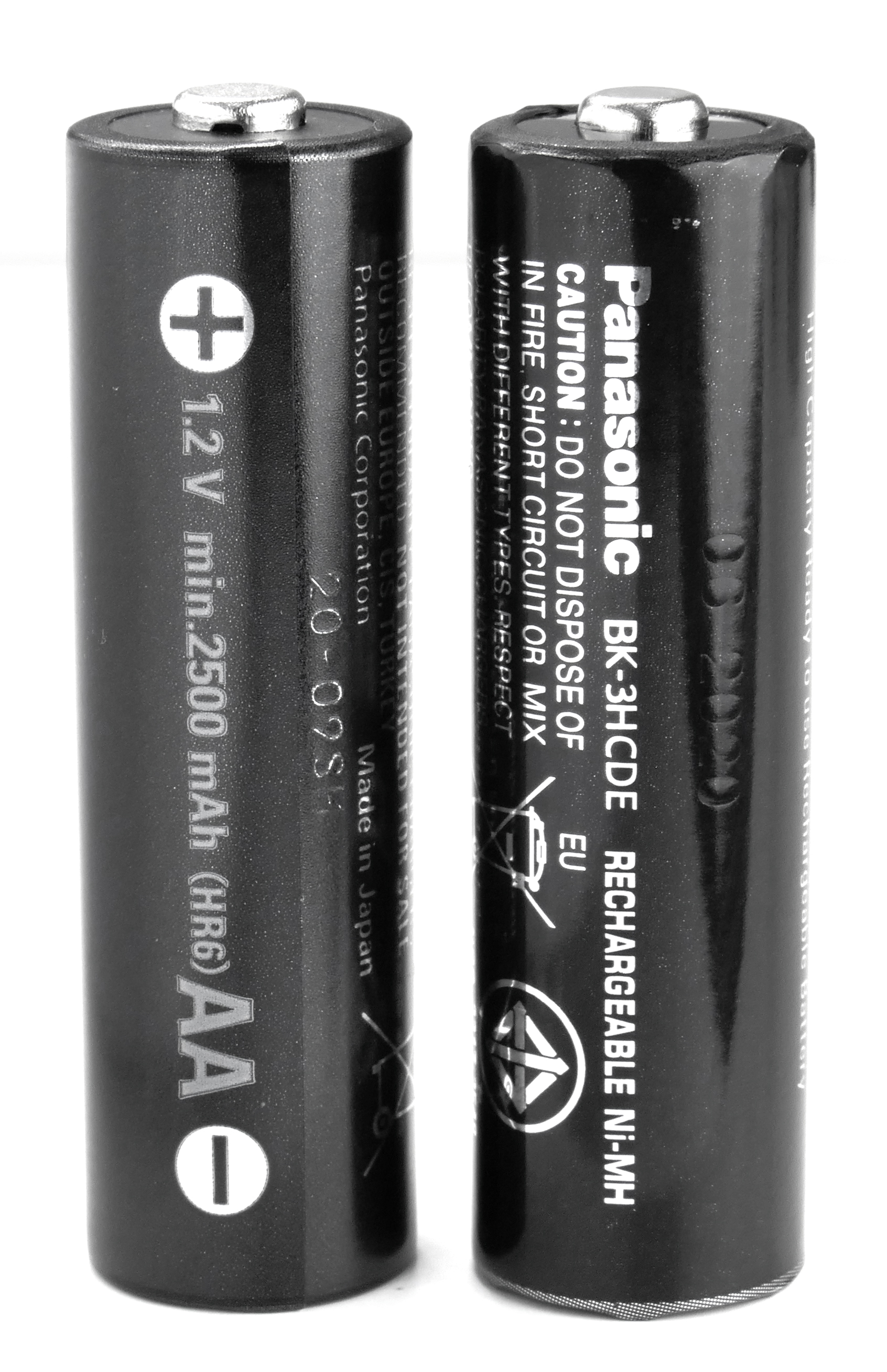
Features of the original battery:
- the battery terminals are slightly porous, "rough",
- visible notches and holes at the positive terminal,
- the battery capacity is described in a matte font,
- the wrap has a uniform black texture along the entire length of the battery - also at the bends at the +/- terminals,
- production date and batch number are clearly embossed on the wrap.
Features of a potential counterfeit:
- the battery terminals are smooth,
- no visible notches or holes at the positive terminal of the battery,
- all prints, including capacity, are highly glossy,
- the wrap has a noticeably lighter shade at the bend at the positive/negative terminal,
- production date and batch number are only slightly embossed, practically invisible.
3. Weight of the batteries.
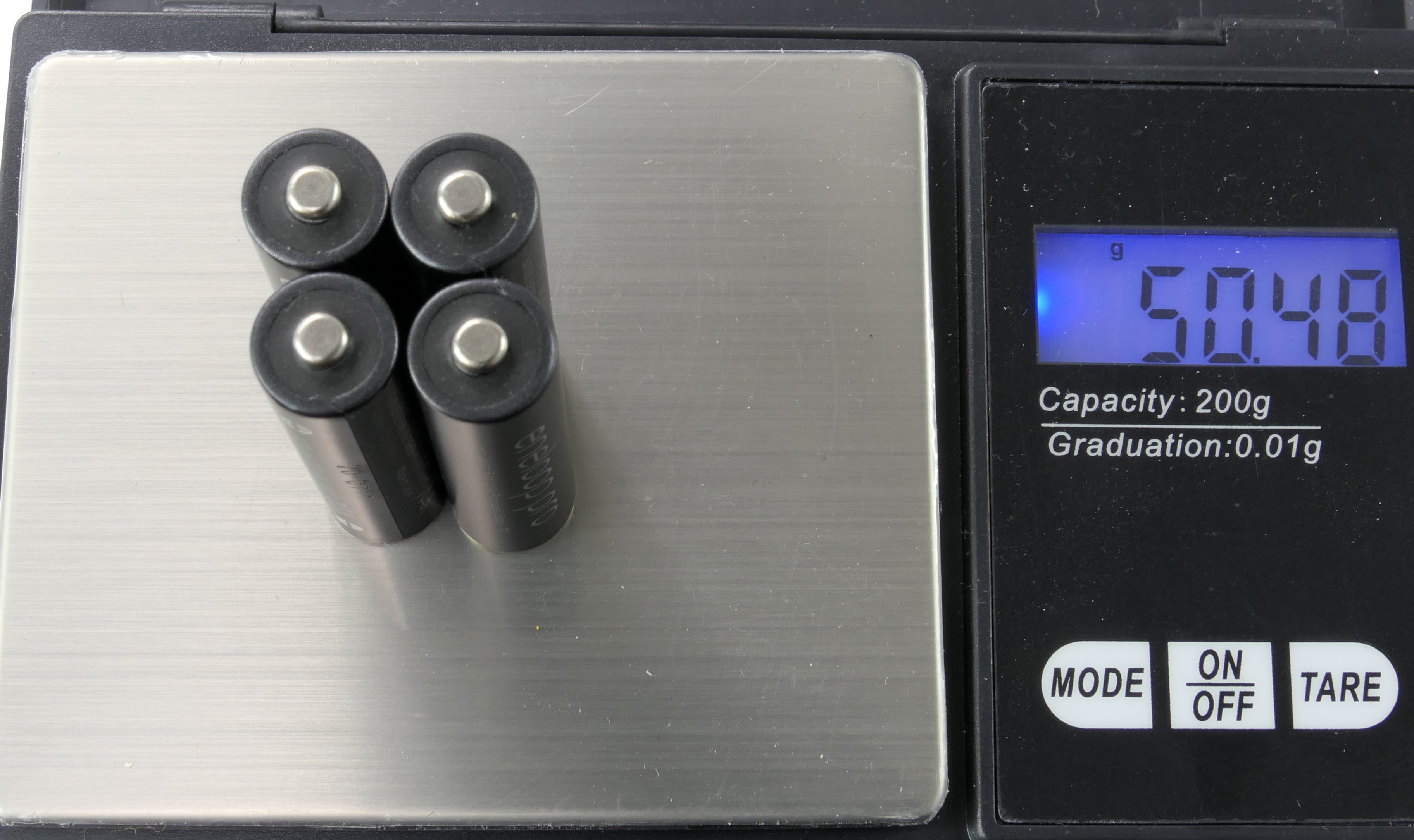
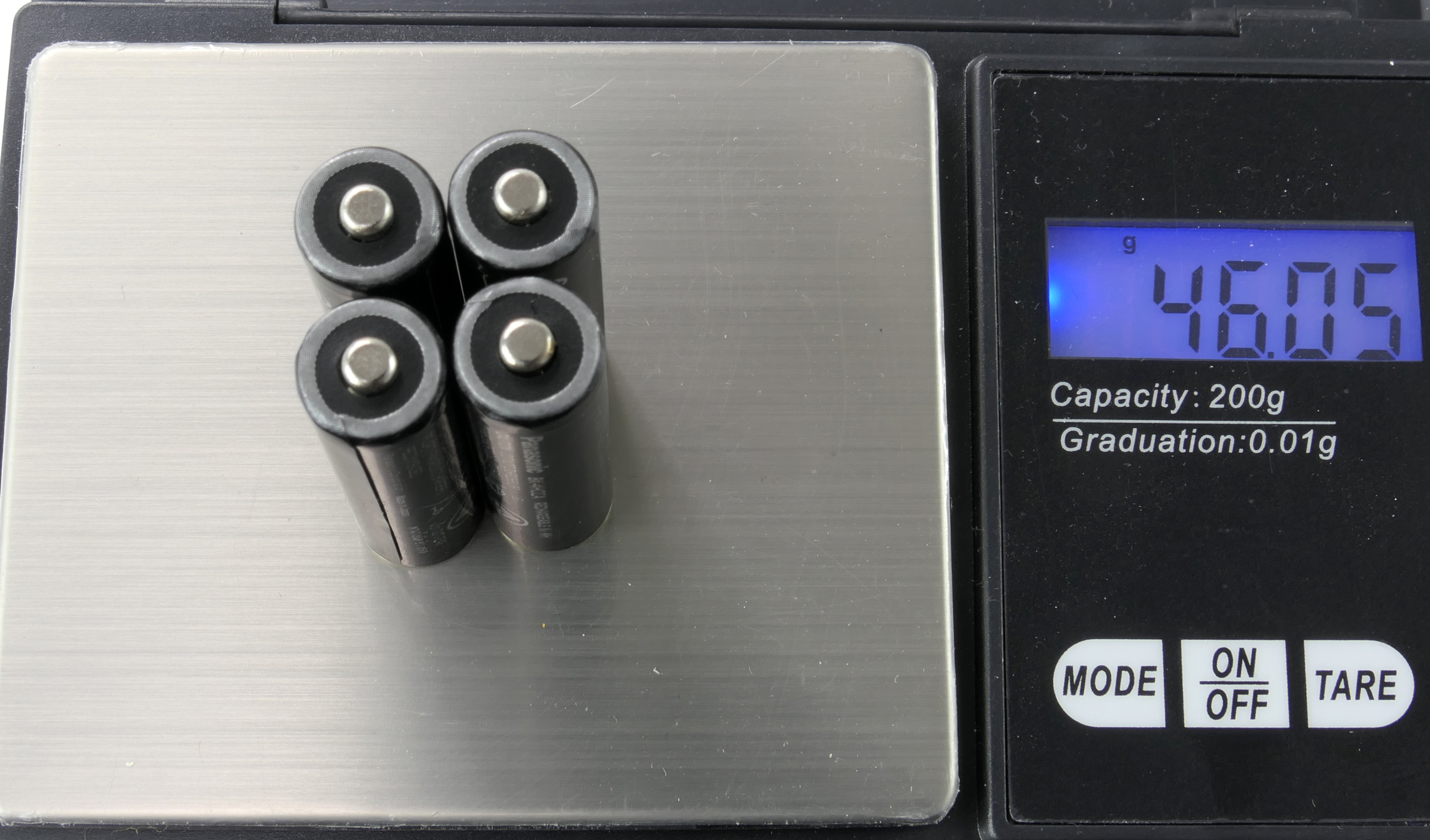
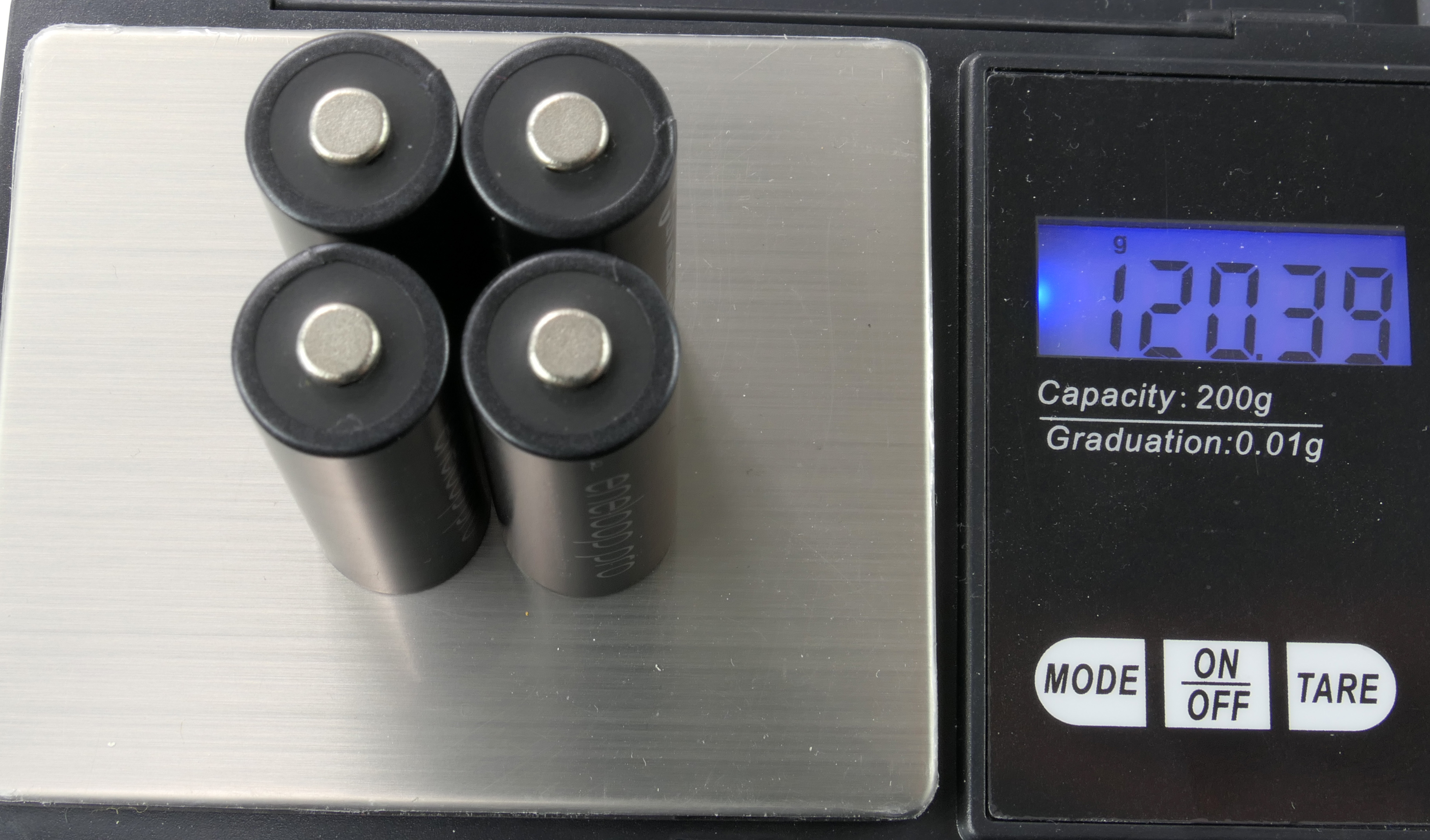
Weight may not always be an ideal indicator of battery quality, but a noticeably lighter battery almost always means less active material used in production.
This was the case here, the average weight of the purchased batteries turned out to be significantly lower compared to the original samples.
AAA batteries reference - original.
AAA batteries purchased - potentially counterfeit.
AA batteries reference - original.
AA batteries purchased - potentially counterfeit.
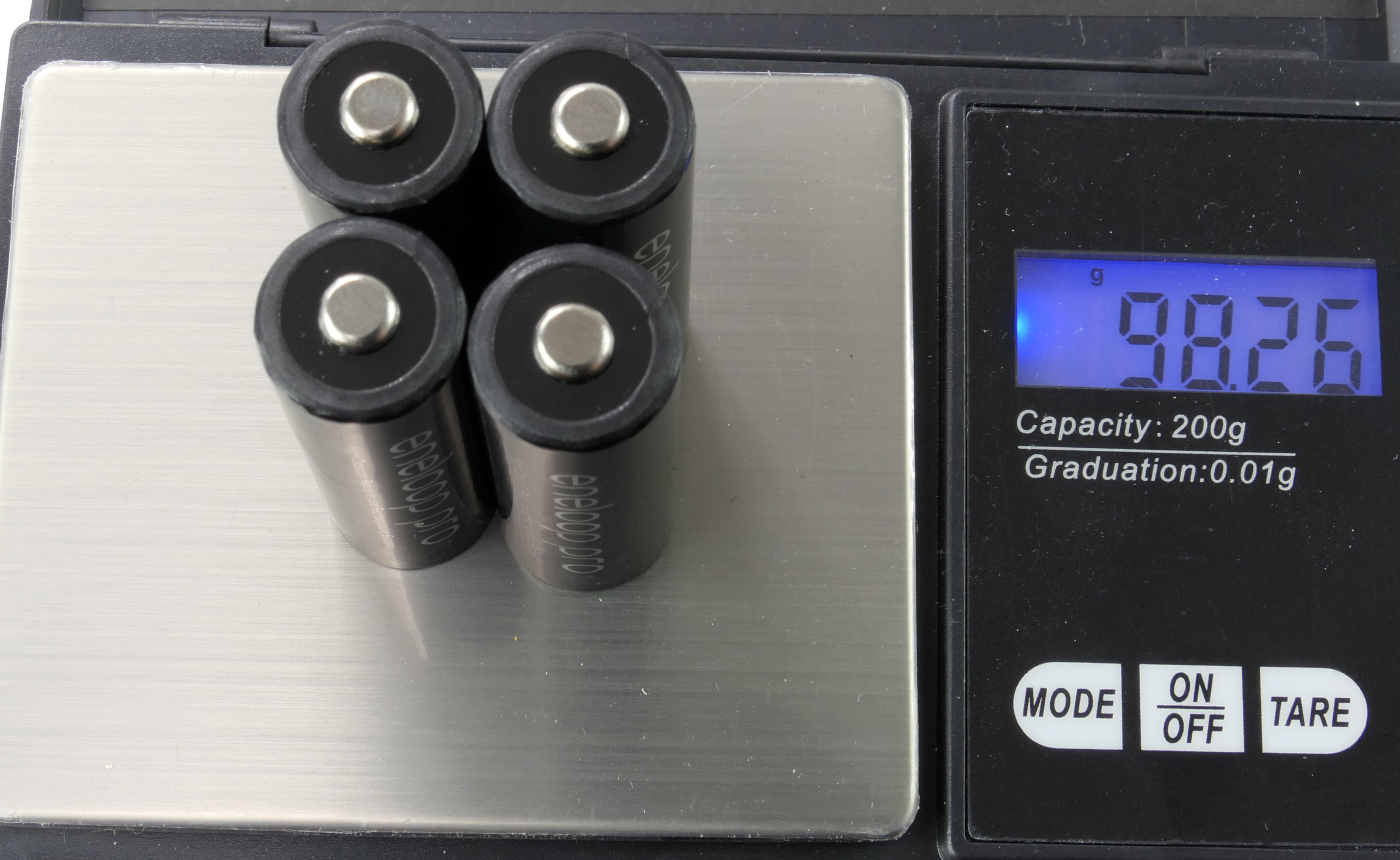
Original Eneloop batteries turned out to be about 10% heavier in the case of AAA/R03 size - the average weight of one purchased battery is 11.5g, while the original weighs 12.6g.
Original Eneloop batteries in AA/R6 size were about 20% heavier - the average weight of one purchased battery is 24.55g, while the original weighs 30.1g.
Such large differences must be reflected in the performance of the batteries - as confirmed by the later capacity test.
4. Degree of initial charging of Ni-MH batteries.
Before we proceeded to the initial measurements of the remaining capacity in the batteries, we measured their voltage. The output voltage, which is often about 0.02-0.04V higher than competitive solutions, is a characteristic feature of original Eneloop batteries.
Original batteries.
Purchased batteries.
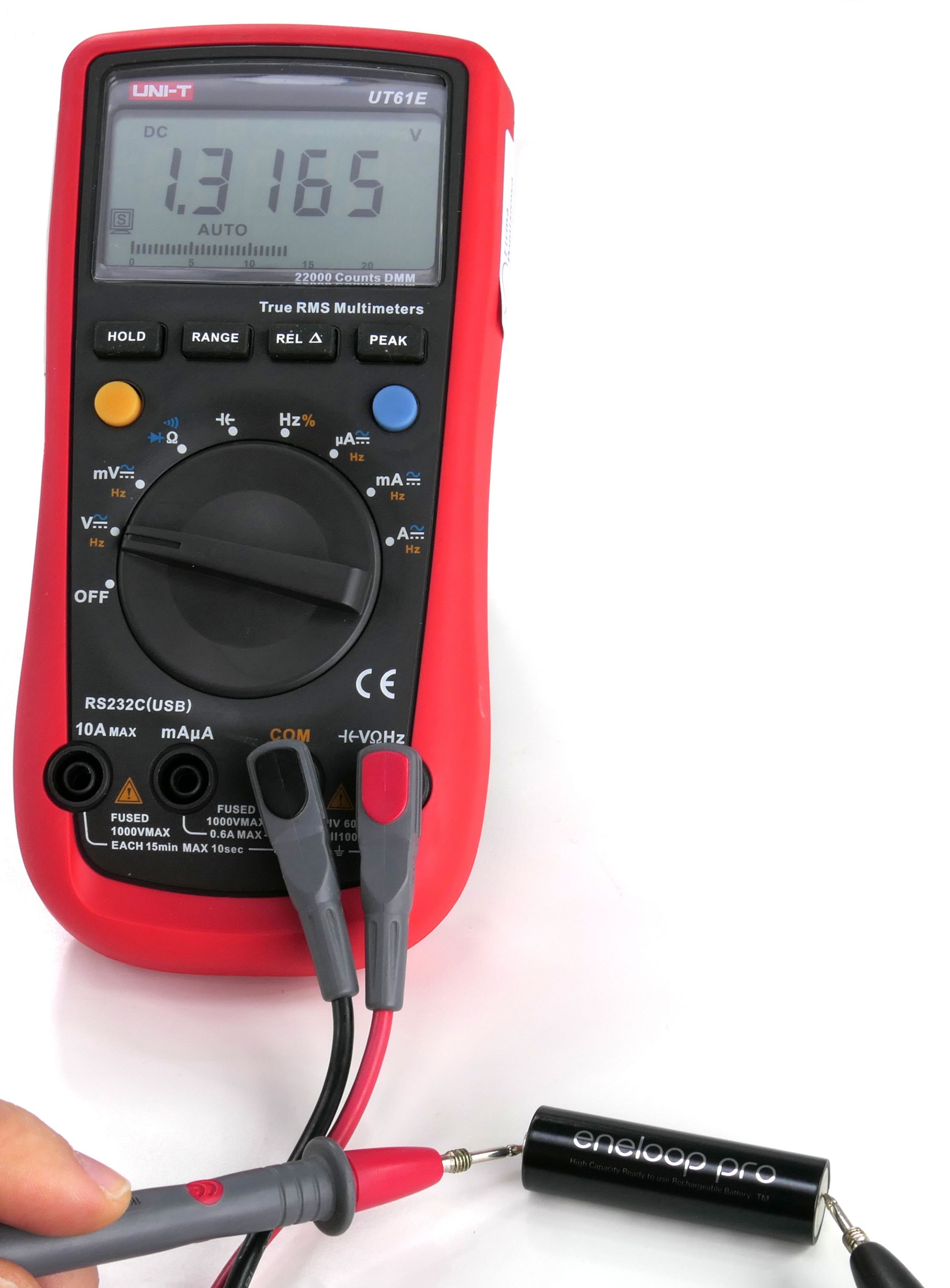
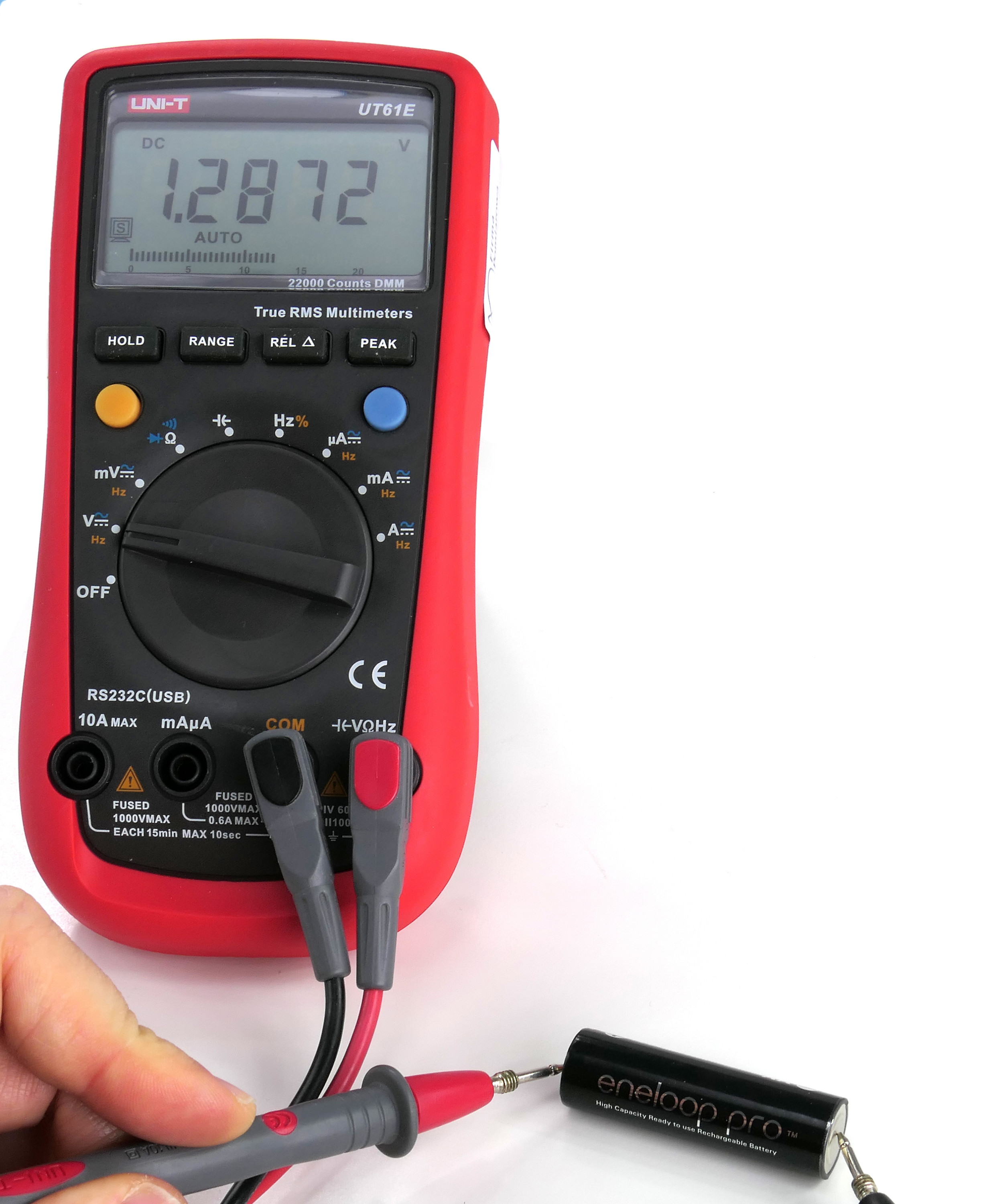
The average voltage, regardless of size, was about 1.32V for original batteries and about 1.29V for newly purchased - potentially counterfeit ones. When it comes to the starting voltage, this is not a convincing difference, and comparing only these values, it is difficult to indicate any defect in the newly purchased batteries.
Moreover, the freshly purchased batteries turned out to be initially charged to a slightly higher degree compared to the reference, original models.
The average capacity of the R03/AAA batteries from the first discharge - right after unpacking - was 525 mAh for potentially counterfeit ones and 417 mAh for original batteries.
The average capacity of the R6/AA batteries from the first discharge - right after unpacking - was 1485 mAh for potentially counterfeit ones and 1275 mAh for original batteries.
However, it should be remembered that the remaining, initial capacity, like the voltage value on each Ni-MH battery, decreases with storage. In this case, the production dates were quite similar - both reference models and newly purchased ones were to be produced more or less in the middle of 2020.
Also remember that no branded Ni-MH battery, even the original Eneloop, is factory charged to 100% of its capacity.
A very good degree of initial charging of these purchased batteries will not raise suspicions of the average user.
5. Capacity tests of Ni-MH batteries.
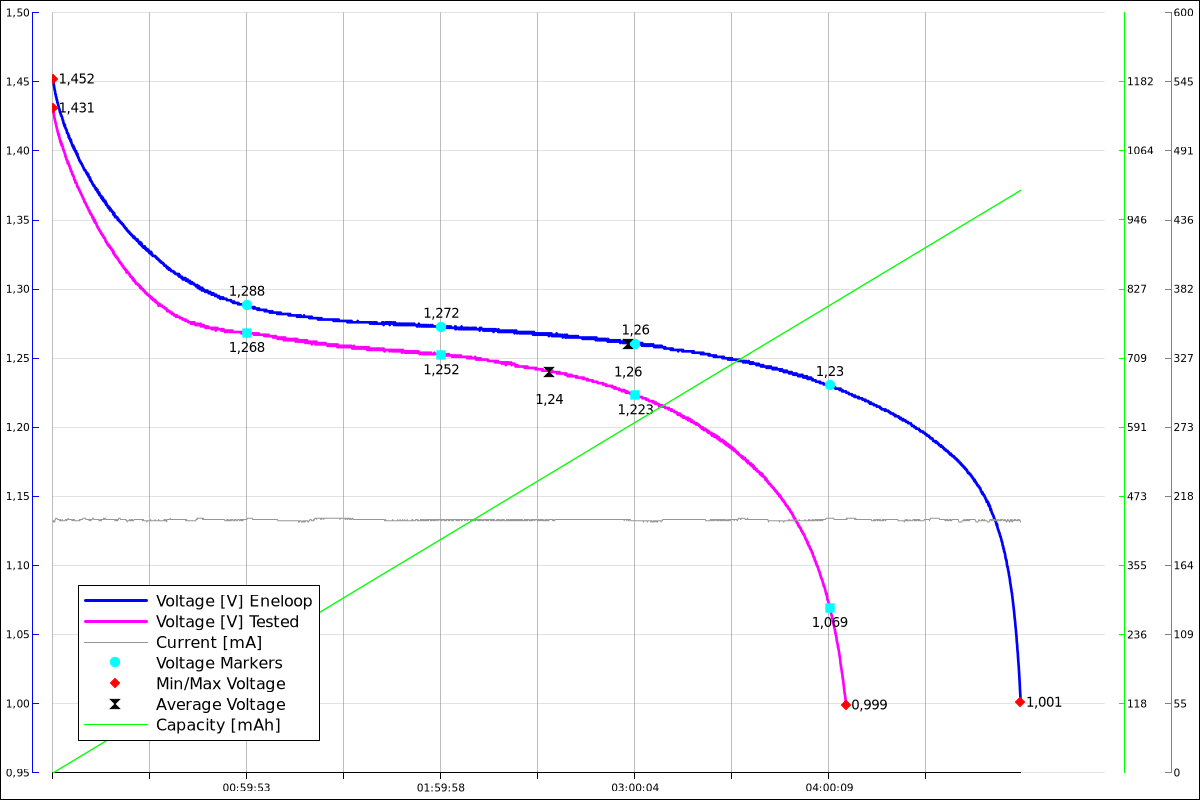
AA/R6 batteries were charged with a current of 700 mA with PVD detection (termination of the charging process upon detection of peak voltage), discharged with a current of 500 mA to a level of 1.0V.
AAA/R03 batteries were charged with a current of 300 mA with PVD detection, discharged with a current of 200 mA to a level of 1.0V.
We performed 5 full charge and discharge cycles. Below we present the maximum measured values, as well as the averages from all cells.
The conditions for discharging and measuring capacity were thus similar to the official measurement method described in the international IEC standard for Ni-MH batteries.
Batteries in size AA/R6.
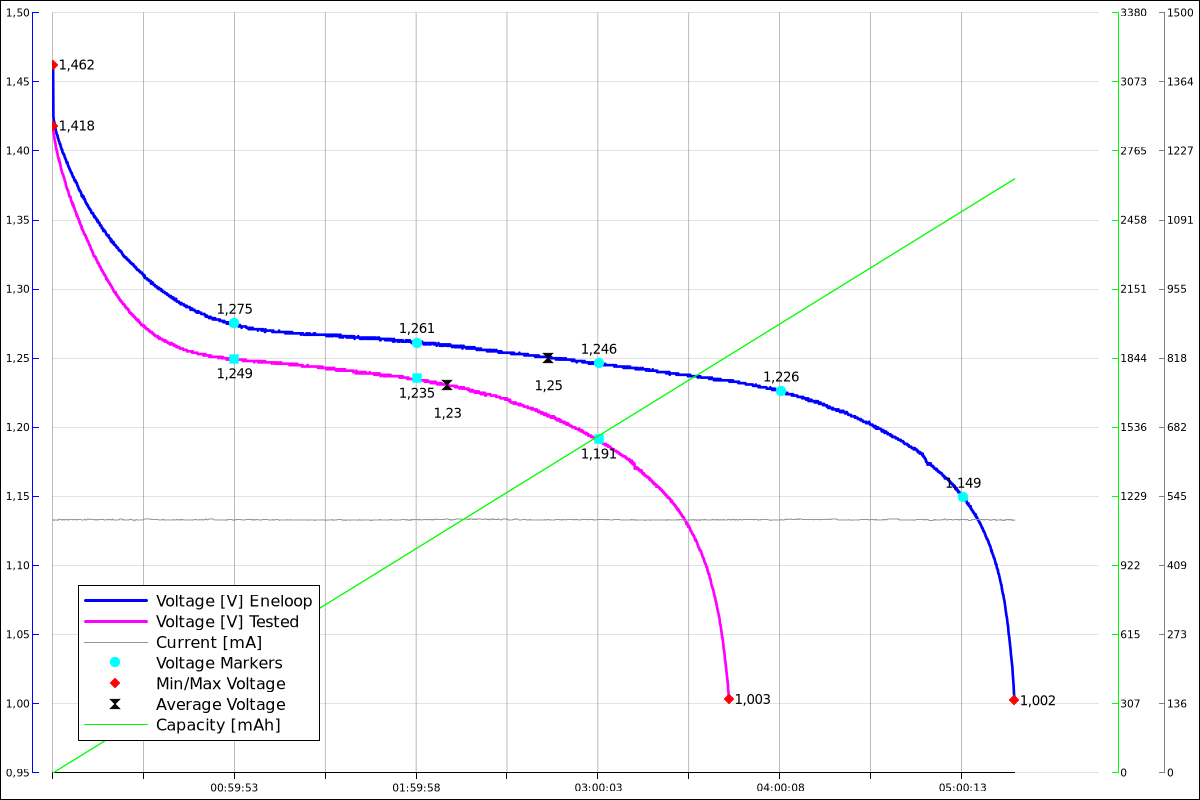
Maximum measured capacity - original batteries: 2641 mAh
Maximum measured capacity - purchased batteries: 1869 mAh
Average measured capacity - original batteries: 2592 mAh
Average measured capacity - purchased batteries: 1843 mAh
Original batteries turned out to be over 40% more efficient / larger, and additionally showed significantly higher voltage throughout the entire discharge process - thus delivering even more energy than would result from the mere difference in capacity.
Batteries in size AAA/R03.
Maximum measured capacity - original batteries: 996 mAh
Maximum measured capacity - purchased batteries: 816 mAh
Average measured capacity - original batteries: 973 mAh
Average measured capacity - purchased batteries: 781 mAh
Original batteries turned out to be about 25% more efficient / larger, and additionally showed higher voltage throughout the entire discharge process - thus delivering even more energy than would result from the mere difference in capacity.
6. Measurement of internal impedance of the batteries.
Based on the result in milliohms, we can preliminarily assess the capabilities and current performance of a given battery. The lower the result, the better. For new good quality Ni-MH batteries, the measured value should be below 50 milliohms for AAA/R03 cells and below 40 milliohms for AA/R6 cells.
Note - here we tested internal impedance - not resistance - measuring internal resistance, despite some similarities, always returns higher values (and less repeatable) than measuring impedance.
Original Eneloop PRO batteries in size AA/R6:
Cell #A: 20 mΩ
Cell #B: 20 mΩ
Cell #C: 20 mΩ
Cell #D: 20 mΩ
Original Eneloop PRO batteries in size AAA/R03:
Cell #A: 44 mΩ
Cell #B: 34 mΩ
Cell #C: 45 mΩ
Cell #D: 40 mΩ
Counterfeit Eneloop PRO batteries in size AA/R6:
Cell #A: 36 mΩ
Cell #B: 35 mΩ
Cell #C: 44 mΩ
Cell #D: 40 mΩ
Counterfeit Eneloop PRO batteries in size AAA/R03:
Cell #A: 40 mΩ
Cell #B: 40 mΩ
Cell #C: 40 mΩ
Cell #D: 40 mΩ
The results are "within the norm" but the significantly better result of the original batteries in size AA/R6 stands out. Such a difference will cause very large discrepancies in the operation of the batteries in demanding devices, and for example, on original black Panasonic Eneloop PRO, an efficient flash will be ready to work much faster and require shorter intervals between subsequent discharges. Similarly, a remote-controlled toy will operate faster, more lively, or a strong flashlight will shine noticeably brighter.
Summary.
As a long-time direct distributor of Eneloop batteries, we have no doubts that the tested batteries purchased through a popular auction service are non-original goods - counterfeits. It is difficult for us to assess whether the seller is aware of the fraud being committed.
Low, unexpected results obtained in capacity tests would place these batteries below the cheaper, white series of Eneloop as well as below many, even 2 times cheaper batteries from other manufacturers.
It is concerning that the average buyer, guided by the unwavering opinion of Eneloop batteries, may unknowingly end up with a product of much lower quality. When choosing a source of purchase for a favorite, well-known brand, one should look for reliable sellers.
The store hurt.com.pl ensures the purchase of original products Eneloop as well as other popular battery and accumulator brands - Baltrade sp. z o.o., the owner of the service, has been a direct, leading distributor of the Eneloop brand for 15 years.
Also read our next article, in which we subject eneloop batteries and their counterfeits to a self-discharge test.
Author: Michał Seredziński
Copying the content of the text or its parts without the consent of a representative of Baltrade sp. z o.o. is prohibited.
You can buy original eneloop batteries at the store hurt.com.pl
4 x AA / R6 Panasonic Eneloop Ni-MH 2000mAh BK-3MCDE/4BE (blister)
- higher capacity min. 2000 mAh
- up to 2100 charging cycles
- retains 70% energy after 10 years from charging!
- operates in low temperatures down to -20°C!
- charged in the production process with solar energy
4 x R6 / AA Panasonic Eneloop PRO NEW Ni-MH 2500mAh BK-3HCDE/4BE (blister)
- highest capacity among new generation rechargeable batteries 2500 mAh
- retains 85% of energy after 12 months from charging!
- operates in low temperatures down to -20°C!
- charged during production with solar energy
-
Hej! Możecie zdradzić jakim sprzętem testowaliście pojemność tych akumulatorków?6116
0
0
-
Hej, Wykorzystywaliśmy konkretnie obciążenie elektroniczne Itech IT8512A+6345
0
0
-
-
Ja uważam,że niekoniecznie te akumulatorki są podróbkami. Ostatnio kupiłem 4-pak Enelopów AAA i okazało się,że one są wyprodukowane w Belgii...,a nie jak wszyscy sądzą, że w Japonii. Sama kwestia innego miejsca produkcji, bądź nawet w innej fabryce będzie skutkowała nieco innymi detalami w wykonaniu ogniwa oraz druku na opakowaniu.1239
0
1
-
Różnica w logotypie itp. to coś co nie może mieć miejsca - niezależnie od miejsca produkcji. Wprawne oko zauważy, że nawet słowo "eneloop" jest inaczej zapisane.
W Belgii nie ma fabryki akumulatorków Ni-MH, która mogłaby produkować Eneloopy, jest tam natomiast europejski oddział firmy odpowiedzialnej za dystrybucję marki Panasonic.
Kwestia co faktycznie było napisane na blistrze - w razie wątpliwości prosimy o kontakt mailowy.1241
0
0-
Nie zgodzę się z tym twierdzeniem, że akumulatory obojętnie gdzie produkowane będą wyglądały identycznie i miały identyczną szatę graficzna na opakowaniu. Jeśli weźmiemy za przykład fabryki baterii Panasonic, to ewidentnie inaczej wyglądają baterie japońskie, a inaczej te belgijskie, produkowane na Europę. W Polsce też od pewnego już czasu Panasonic produkuje baterie alkaliczne(wcześniej tylko cynkowe na całą Europę), i one też różnią się od tych belgijskich... Specjalnie za przykład wziąłem baterie, gdyż ze względu na opłacalność, nikt chyba nie podrabia baterii wartej ok. 1 zł.4691
0
0
-
W Belgii ma siedzibę firma odpowiedzialna za sprzedaż eneloop w Europie, ale akumulatorki eneloop nie są produkowane w tym kraju.5905
0
0
-
-
-
-
Wykazaliście, że kupiliście podróby. I...? Zgłosiliście to gdzieś?1216
0
1
-
Oczywiście, zgłoszone producentowi, właścicielowi serwisu aukcyjnego, niestety nic to nie dało - podróbki nadal pojawiają się w sprzedaży.1219
0
0
-